Loading...
Searching...
No Matches
fix_client::SeqNumStore Class Reference
A thread-safe, file-backed repository for FIX Sequence Numbers. More...
#include <SeqNumStore.h>
Collaboration diagram for fix_client::SeqNumStore:
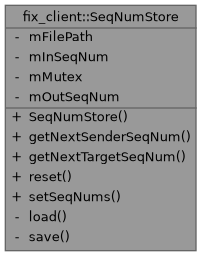
Public Member Functions | |
| SeqNumStore (const std::string &senderCompId, const std::string &directory="seq_store") | |
| Constructs a new SeqNumStore. | |
| uint32_t | getNextSenderSeqNum () const |
| Gets the next expected outgoing sequence number. | |
| uint32_t | getNextTargetSeqNum () const |
| Gets the next expected incoming sequence number. | |
| void | reset () |
| Resets the sequence numbers to 1 (e.g., on a new day or clean Logon). | |
| void | setSeqNums (uint32_t inSeq, uint32_t outSeq) |
| Sets both sequence numbers and persists them to disk. | |
Private Member Functions | |
| void | load () |
| void | save () const |
Private Attributes | |
| std::string | mFilePath |
| uint32_t | mInSeqNum = 1 |
| std::mutex | mMutex |
| uint32_t | mOutSeqNum = 1 |
Detailed Description
A thread-safe, file-backed repository for FIX Sequence Numbers.
To prevent ResendRequest loops on startup, the client must remember its last known sequence numbers. This class saves them to disk.
Constructor & Destructor Documentation
◆ SeqNumStore()
| fix_client::SeqNumStore::SeqNumStore | ( | const std::string & | senderCompId, |
| const std::string & | directory = "seq_store" |
||
| ) |
Constructs a new SeqNumStore.
- Parameters
-
senderCompId The component ID, used to generate the filename. directory The directory to save the sequence files (defaults to local dir).
Here is the call graph for this function:

Member Function Documentation
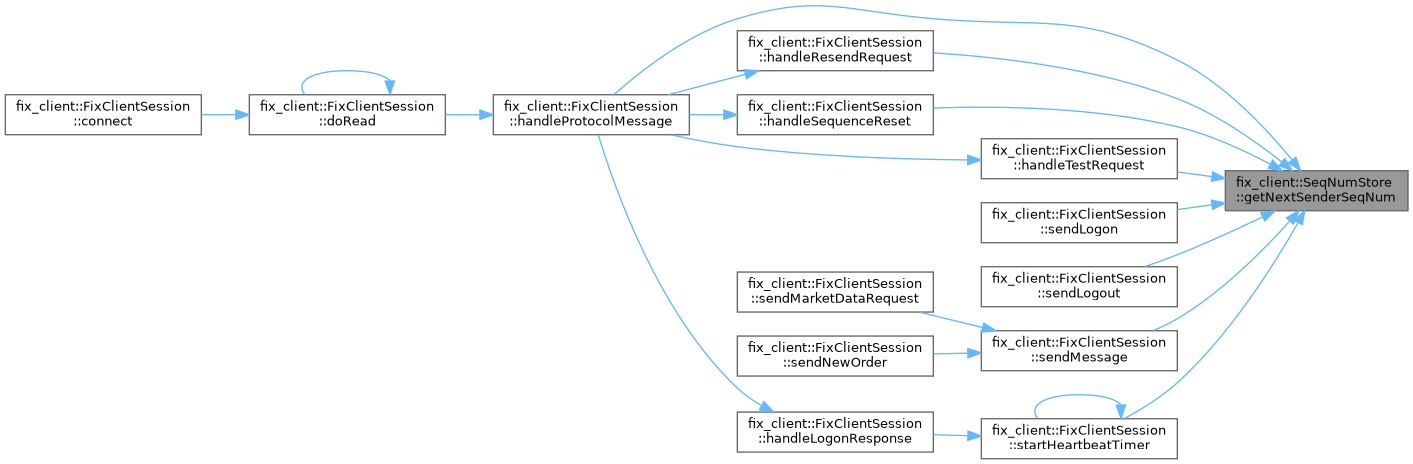
◆ getNextSenderSeqNum()
| uint32_t fix_client::SeqNumStore::getNextSenderSeqNum | ( | ) | const |
Gets the next expected outgoing sequence number.
Here is the caller graph for this function:
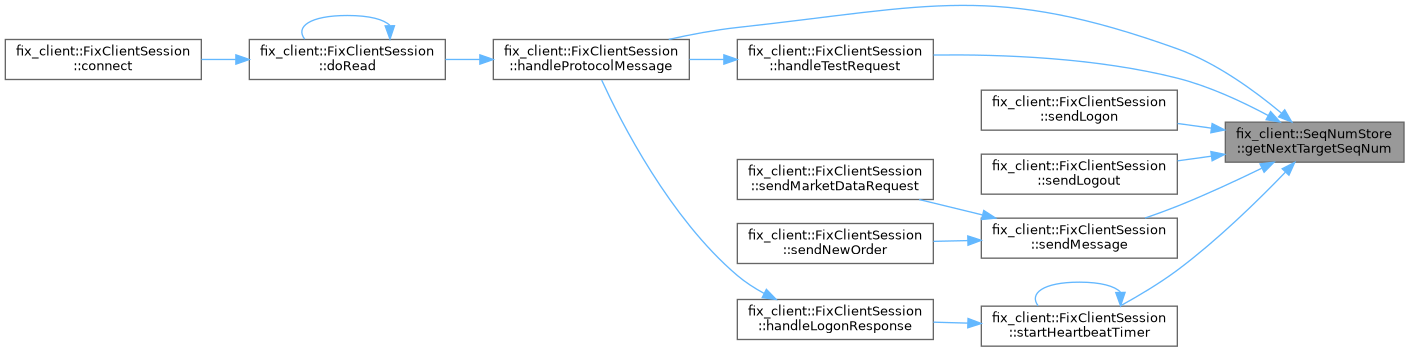
◆ getNextTargetSeqNum()
| uint32_t fix_client::SeqNumStore::getNextTargetSeqNum | ( | ) | const |
Gets the next expected incoming sequence number.
Here is the caller graph for this function:
◆ load()
|
private |
Here is the call graph for this function:

Here is the caller graph for this function:

◆ reset()
| void fix_client::SeqNumStore::reset | ( | ) |
Resets the sequence numbers to 1 (e.g., on a new day or clean Logon).
Here is the call graph for this function:

Here is the caller graph for this function:

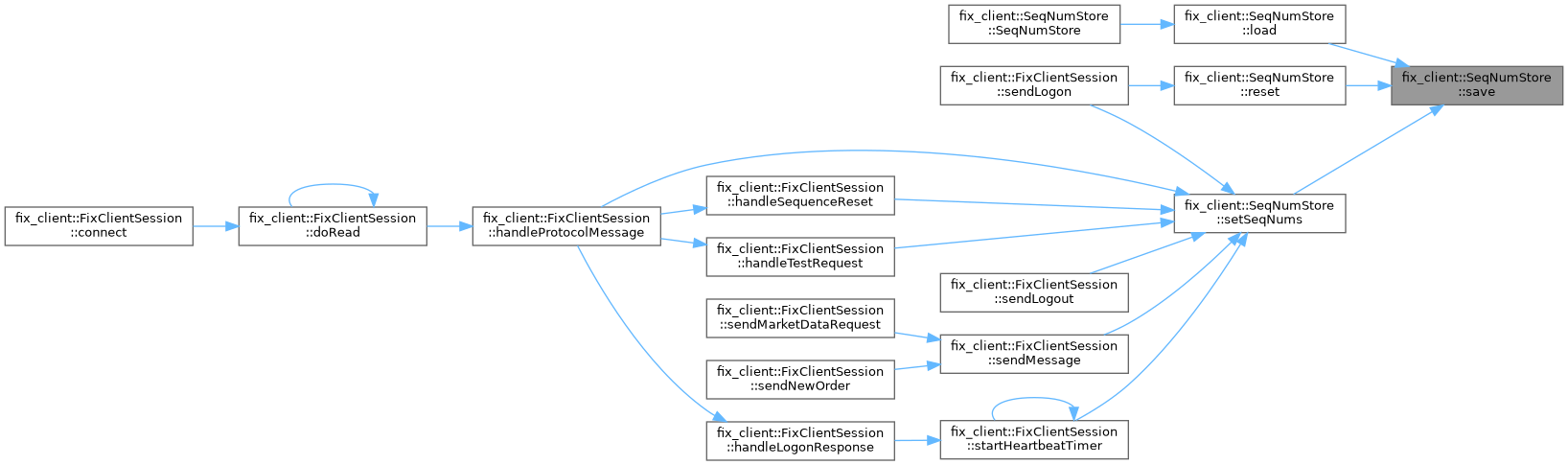
◆ save()
|
private |
Here is the caller graph for this function:
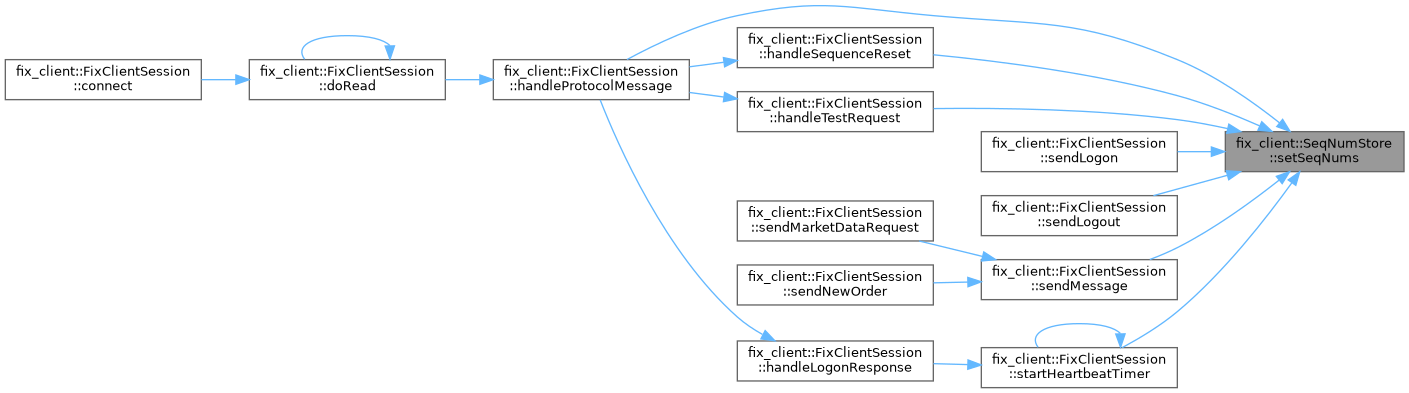
◆ setSeqNums()
| void fix_client::SeqNumStore::setSeqNums | ( | uint32_t | inSeq, |
| uint32_t | outSeq | ||
| ) |
Sets both sequence numbers and persists them to disk.
- Parameters
-
inSeq The incoming sequence number (TargetSeqNum, from server). outSeq The outgoing sequence number (SenderSeqNum, from client).
Here is the call graph for this function:

Here is the caller graph for this function:
Member Data Documentation
◆ mFilePath
|
private |
◆ mInSeqNum
|
private |
◆ mMutex
|
mutableprivate |
◆ mOutSeqNum
|
private |
The documentation for this class was generated from the following files:
- client/client_fix/include/fix_client/SeqNumStore.h
- client/client_fix/src/SeqNumStore.cpp